
5 Ways to add WONDER to your child's summer
5 Simple Ways to Add More Wonder to Your Child’s Summer
Not every meaningful summer memory needs a reservation, a packed schedule, or an elaborate plan.
Sometimes wonder begins with a walk around the block, a patch of dirt, a favorite book, or permission to make a little mess.
Children naturally notice things adults have learned to overlook. They stop for the butterfly. They want to know what is underneath the rock. They can turn a stick into a wand, a fort, a fishing pole, or the beginning of an entire adventure.
Summer gives us the opportunity to slow down and make room for more of that.
Here are five simple ways to add a little more wonder to your child’s summer.
1. Take a Nature Walk
You do not have to travel to a national park to find something worth discovering.
Walk through your garden, around the block, or through your neighborhood and let your child lead the way. Look for birds, flowers, insects, unusual leaves, animal tracks, or anything else that catches their attention.
Try not to rush them past the little things.
A five-minute walk can easily become a full investigation when a child finds a caterpillar, hears an unfamiliar bird, or notices that two flowers growing beside each other look completely different.
Bring a magnifying glass, a notebook, or a camera along, but do not worry about turning the walk into a formal lesson. Let curiosity do most of the work.
You can also explore the National Park Service’s nature and biodiversity activities for ideas that help children look more closely at plants, animals, and the environments around them.
For children who become interested in the sky, trees, or changing landscapes, the NASA GLOBE Observer program offers simple ways for families to record what they notice about clouds, trees, and the land around them.
2. Touch Dirt
There is something wonderfully satisfying about putting your hands in the soil, planting something, and watching it grow.
Let your child choose a few flowers, herbs, vegetables, or pollinator-friendly plants. You do not need a large garden. A flowerpot, raised bed, or small patch of soil is enough.
Children can help dig, plant, water, and watch for changes throughout the summer.
They may discover that gardening involves patience, problem-solving, weather, insects, and more questions than anyone expected.
Why are the leaves turning yellow? What keeps eating the basil? Why do butterflies visit one flower but ignore another?
A garden has a way of becoming its own ongoing adventure.
Families can also participate in The Great Sunflower Project by observing flowers and counting the bees, butterflies, and other pollinators that visit. It is a simple way to turn time in the garden into an even closer look at the life happening there.
3. Read Outside
Move storytime outdoors.
Bring a favorite book, a blanket, and a few snacks into the backyard or onto the porch. You might choose a familiar favorite or take Kit & Oak and the Nibsy Napper outside for an adventure with the residents of Barnwood Hall.
Reading outdoors changes the whole feeling of the experience, especially when the story connects with something happening nearby.
A book about insects feels different when a bee is buzzing through the flowers. A story about animals becomes more interesting when birds are calling from the trees.
You can read aloud together, let siblings take turns, or give everyone time to enjoy a book of their own.
There is no complicated setup required. Just choose a shady spot and settle in.
4. Let Nature Inspire Some Art
Take the art supplies outside and see what happens.
Children can paint flowerpots, make leaf rubbings, sketch what they find, create nature collages, paint rocks, or build tiny worlds from sticks, bark, flowers, and stones.
The project does not need to become a masterpiece.
In fact, sometimes the best part is simply having enough room to experiment, mix colors, spill a little water, and try something new without worrying about making everything perfect.
Art gives children another way to process what they see and experience. A flower is no longer only a flower. It becomes a shape, a color, a pattern, or the inspiration for an entirely new creation.
5. Make Room to Move
Summer wonder is not always quiet.
Sometimes it looks like running barefoot through the grass, dancing outside, climbing, chasing bubbles, making up games, or pretending the backyard is a mysterious unexplored land.
Children need space to move without every moment being organized for them.
Give them chalk, a ball, a jump rope, a bucket of water, or nothing at all. Then let them invent the rest.
Unstructured movement gives children room to test ideas, build confidence, use their imaginations, and simply enjoy being children.
Wonder Does Not Have to Be Complicated
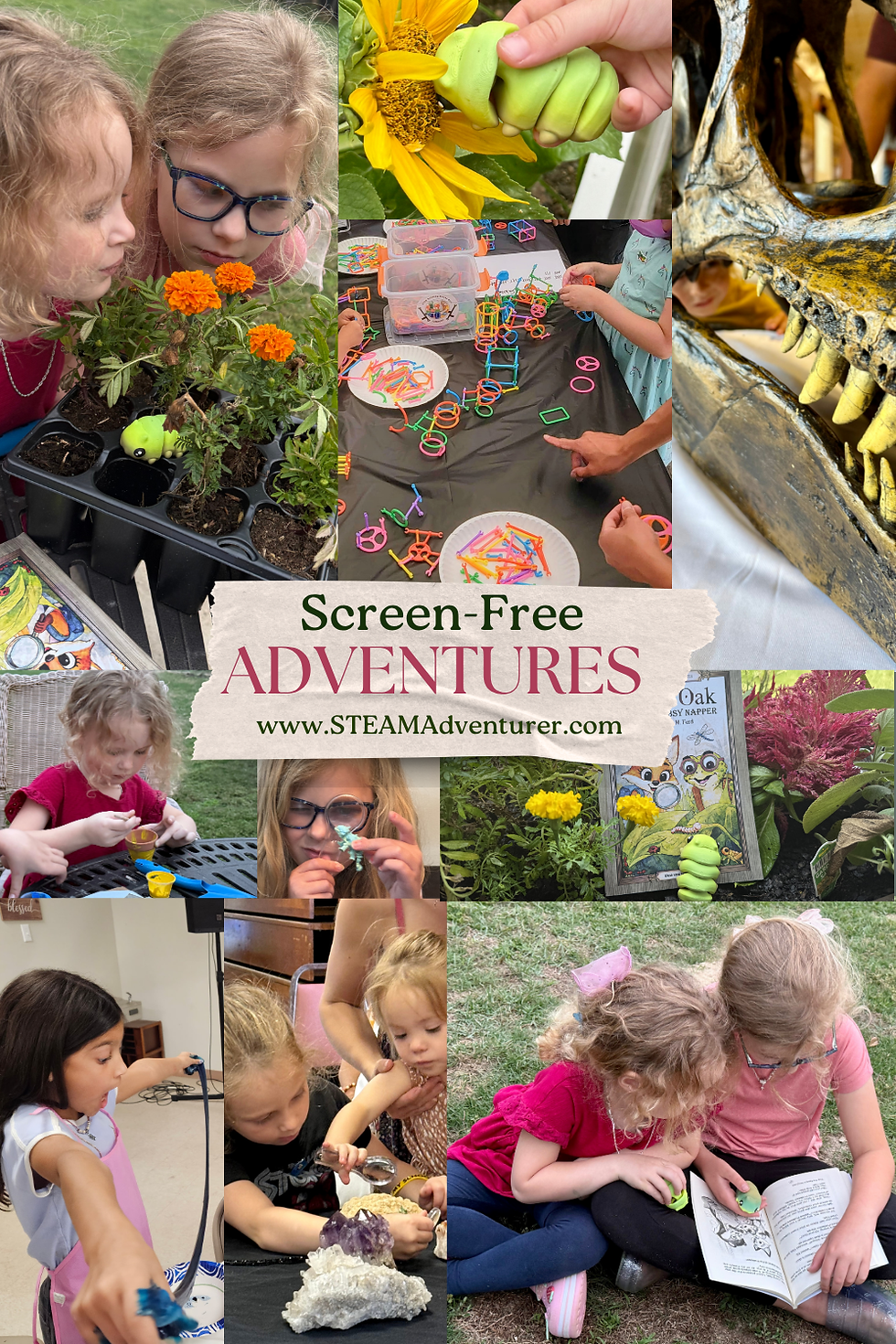
The photos in this carousel came from ordinary moments spent reading, gardening, creating, moving, and exploring together.
There was no elaborate schedule behind them.
One activity simply led to another.
A story became an outdoor adventure. A butterfly inspired questions. A few flowers became the beginning of a pollinator garden. Art supplies came outside, and an ordinary afternoon became something worth remembering.
That is the kind of childhood Barnwood Hall celebrates.
Wonder is not something we have to manufacture for children. Most of the time, it is already waiting for them.
We simply have to give them enough time and space to find it.
Comments